A homeowner posted on Reddit last week with a leak and a question. They had contacted five or six plumbers trying to get someone out quickly, hired one, and figured that was the end of it. Two weeks later some of the others were still calling and texting to ask if they needed someone. Then a company they had never contacted rang to say it had heard they were looking for a plumber.
Their last line is the one to sit with: "I'm starting to think I should stop giving contractors my actual number altogether."
Read that as the customer, then read it as one of the plumbers who lost the job.
What the customer was really telling you
Three things happened in that one post.
The job went to whoever answered first. A leak does not wait. The customer rang around, and the plumber who could get there quickly got the work. Price and reviews did not come into it.
The plumbers who lost kept going. Nobody asked whether the job was still open. They just kept following up, and every message after the job was gone made them look worse.
Someone sold the enquiry on. A business they never contacted had their number. That is what shared lead sites do: one enquiry, sold to several trades, and the customer ends up fielding calls they never asked for.
The result is a customer who now trusts every tradie a bit less, including the one who did the job.
Reply in minutes, even when you are on the tools
You cannot pick up every call when you are under a house. You can make sure every enquiry gets an answer within a few minutes anyway.
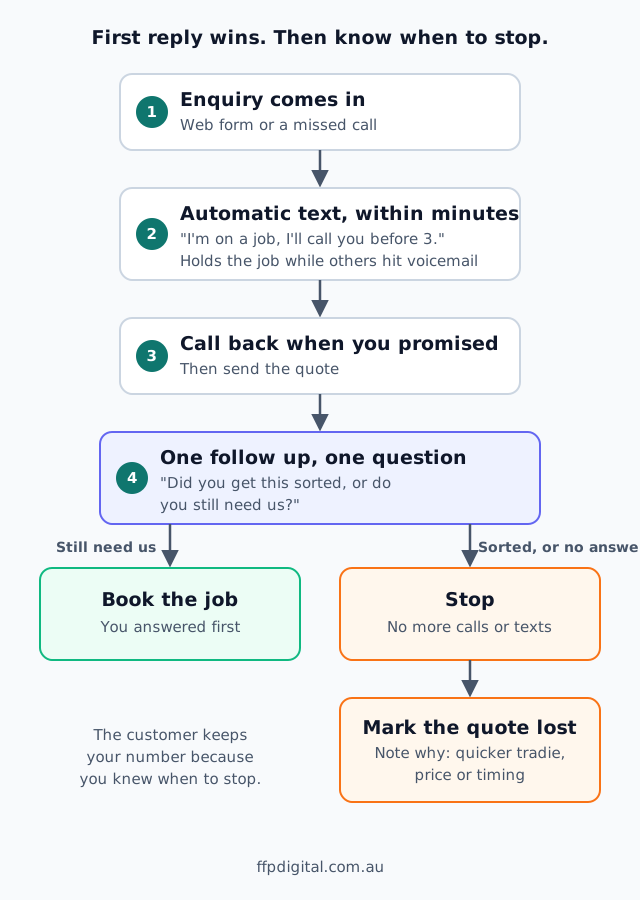
Set up an automatic text that goes out the moment a web enquiry or missed call comes in. Keep it short and specific: who you are, that you got their message, and when you will call back. "Thanks, it's [your name] from [your business]. I'm on a job, I'll call you before 3." That text often holds the job for you while the other five are still on voicemail.
Then keep the promise. A call at 2:45 beats a better quote at 5.
Follow up once or twice, then stop
Following up on a quote is good practice. Following up on a job that is already done is not.
Make the second follow up a question the customer can answer in one word: "Did you get this sorted, or do you still need us?" If they say they are sorted, you stop. If they say nothing after that, you stop too.
Then mark the quote lost and note why: went with someone quicker, price, timing. After a few months that list tells you more about your business than any report.
Think twice about shared leads
If you buy leads from a site that sells the same enquiry to several trades, you are the fourth or fifth call that customer gets. The reply race is already lost, and the customer is already annoyed. Leads that come straight to you, from your own site, your Google profile or a referral, are worth more because you are the only one answering.
How this looks in practice
If you run ServiceM8, most of this is already within reach. At its launch on 17 September, ServiceM8 announced that its Office Agent can find your most valuable unanswered quotes and draft the follow up for you, with nothing sent until you approve it. That is the right shape for this. Let the software find the quotes that went quiet, then you decide who gets the one question and who gets marked lost. If I were setting this up for a busy tradie, I would start with the instant reply to new enquiries, because that is the one that wins jobs while you are on the tools.
None of this needs new software or a new habit. It needs the enquiry answered straight away, the follow up to ask a question, and the chasing to stop when the customer has moved on. The customer in that Reddit post would have been happy to keep a plumber's number. They just wanted the calls to stop.